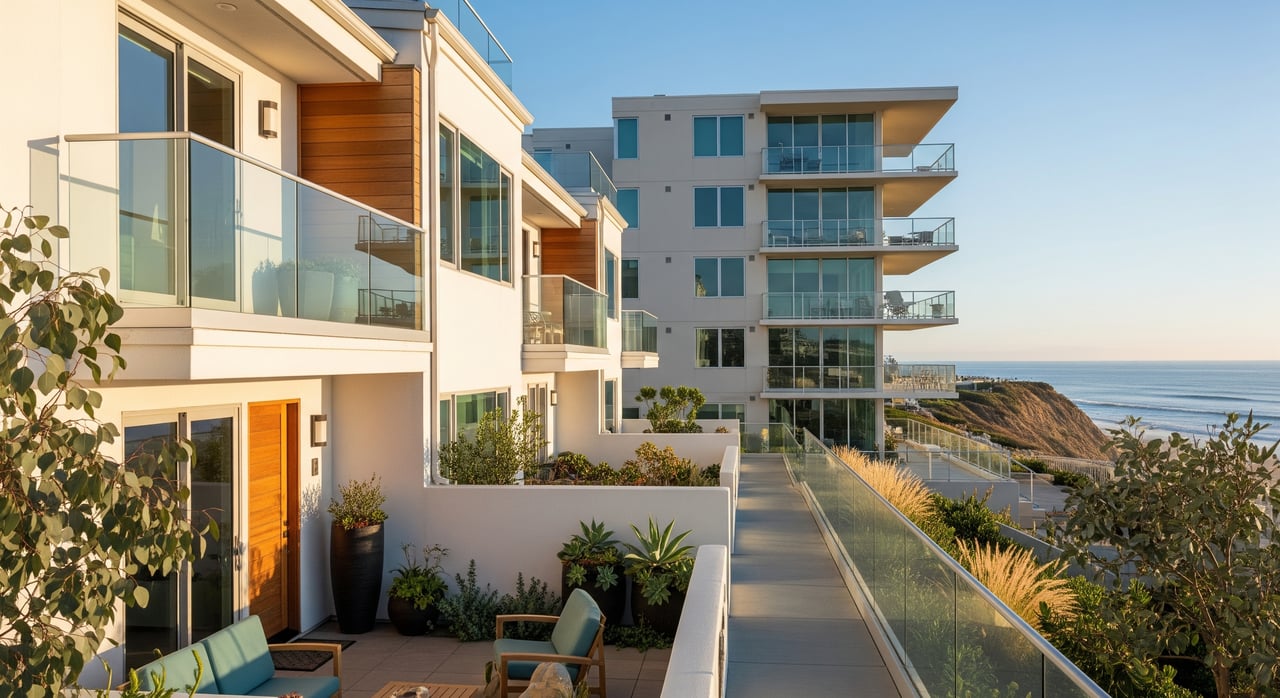
Condo vs. Townhome in Solana Beach
December 18, 2025
December 18, 2025
Torn between a beach-close condo and a townhome in Solana Beach? You are not alone. With coastal amenities, active HOAs, and unique lending and insurance rules, the choice can feel complex. This guide breaks down how each option works in Solana Beach, what costs and risks to expect, and how to compare two listings with confidence. Let’s dive in.
Condos and townhomes look similar, but they are not the same legally. A condominium means you own the interior of your unit plus a shared interest in common areas. The HOA typically controls the exterior, roof, building systems, and shared spaces.
A townhome is a style of attached housing. In California, it can be legally structured as a condo or as a planned unit development, sometimes called fee simple. In a fee-simple or PUD townhome, you may own the land under your unit and be responsible for more exterior upkeep. Always confirm the legal structure for each listing because it affects maintenance, financing, and insurance.
Solana Beach offers a mix of low-rise condo buildings near the coast and multi-story townhomes inland and in newer infill pockets. Areas near Pacific Coast Highway and Cedros Avenue are prized for walkability to dining, shops, and beach access. Proximity to the Solana Beach train station offers Coaster and Amtrak access for commuters and weekend travelers.
As you compare, weigh beach walkability, parking and storage, views and outdoor space, and the age of the building. Older coastal condos may need more building maintenance, while newer townhomes often feature modern standards and private garages.
HOA fees reflect what the association maintains. Condo HOAs often cover exterior maintenance, building insurance for common areas, and amenities like pools or landscaping. Townhome HOAs can be lower or similar depending on whether the HOA includes the roof and exterior.
Insurance needs also differ. Condo owners typically carry an HO-6 policy for interior finishes, personal property, liability, and loss assessment. Fee-simple townhome owners often need HO-3 or HO-5 coverage for the full structure. If your townhome is legally a condo, HO-6 rules may apply. In coastal Solana Beach, consider salt corrosion, wind exposure, and flood risk. Lenders may require flood insurance if the property lies within a FEMA flood zone. Review the HOA master policy limits and deductibles, especially for earthquake and wind or flood events.
Financing can be different for condos and townhomes. Condos often face project-level underwriting, including owner-occupancy ratios, HOA delinquency rates, and reserve levels. FHA and VA loans may require the condo project to appear on an approved list or meet specific criteria.
Fee-simple townhomes and PUDs are more often underwritten like single-family homes with fewer project approvals. This difference can affect how many buyers can finance a unit, which influences resale time and price. If you plan to use FHA or VA, or you want to keep a wide buyer pool for resale, confirm a project’s approval status early.
In Solana Beach, properties near the bluff or at lower elevations may face flood risk. Check flood zone status and insurance requirements before you write an offer. Bluff setbacks and coastal regulations can affect repairs, decks, and major exterior work. Sea level rise and erosion are long-term factors for beachfront properties. Ask for clear disclosures and review HOA policies on coastal maintenance and assessments.
Parking and storage vary widely. Many townhomes include private garages and direct entries, which add convenience and privacy. Condos may offer assigned garage spaces or surface parking. Consider guest parking, bike storage, and surfboard or beach gear storage. Outdoor space matters too. Townhomes often provide patios or small yards, while condos may offer balconies and shared amenities.
Use this list to keep your analysis clean and objective:
Start with the facts. Confirm the legal structure for each property, request the full HOA packet, and review flood and coastal considerations. If you are financing with FHA or VA, verify project approval early. Then walk the neighborhood at different times of day to feel the lifestyle, noise levels, parking realities, and access to the beach and transit.
If you want a clear plan tailored to your goals, connect with a local advisor who understands both construction realities and coastal HOAs. For boutique guidance backed by hands-on building expertise, reach out to Matt Kidd for a local strategy session.
Stay up to date on the latest real estate trends.
Get assistance in determining current property value, crafting a competitive offer, writing and negotiating a contract, and much more. Contact Matt today to discuss all your real estate needs!