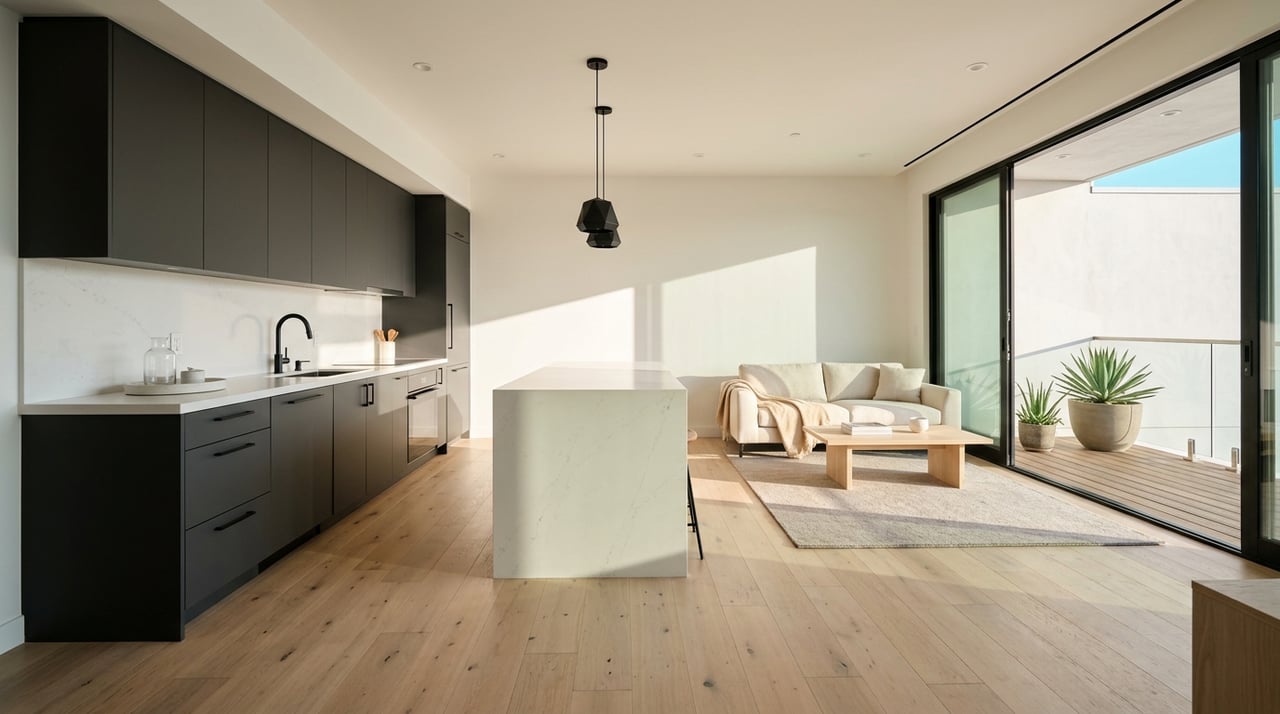
Del Mar Luxury Condos And Townhomes: Buyer Overview
May 21, 2026
May 21, 2026
If you want Del Mar access without the full workload of a detached coastal property, luxury condos and townhomes deserve a serious look. In a small beach city where inventory is limited, the right attached home can give you walkability, views, garage utility, and a more manageable day-to-day ownership experience. This guide will help you understand what luxury attached living in Del Mar usually looks like, what tradeoffs come with it, and what to review before you make an offer. Let’s dive in.
Del Mar is compact by design. The city covers about 2.2 square miles, has roughly 4,200 residents, and draws more than 2 million visitors each year. The city also describes its Village as a seaside setting you can explore without a car, which helps explain why well-located condos and townhomes can be so appealing.
That appeal gets stronger when you consider how limited the inventory is. Current portal snapshots show just 8 condos for sale in Del Mar on Redfin at a median listing price of $1.48 million, while Realtor.com shows 4 townhomes for sale within city boundaries. In a market this tight, details like location, views, garage count, and HOA structure often matter just as much as price.
Del Mar’s planning framework also shapes the product you see. The Village Specific Plan area is about 40 acres across 68 properties, and the city’s design standards for multi-unit and mixed-use housing aim to support a pedestrian-oriented, village-scale setting. In practical terms, that means attached housing here is usually more context-sensitive and low-profile than high-rise or high-density.
In Del Mar, luxury attached homes tend to fall into a few practical categories. You will usually see ocean-close or village-adjacent communities, gated or view-oriented enclaves set a bit back from the sand, and smaller HOA communities that trade a little beach immediacy for more privacy or garage functionality.
The amenity mix is also distinct. Instead of a tower-style package with a long list of indoor services, Del Mar luxury often shows up through location, outdoor living, views, parking, and well-kept shared spaces. Pools, spas, clubhouses, tennis courts, landscaped grounds, private parks, and bocce courts are more typical here.
A few community examples show the range buyers may encounter:
For buyers used to luxury towers in larger cities, Del Mar can feel different in a good way. Here, luxury attached living is often more about a coastal setting, a strong floor plan, outdoor connection, and practical ownership features than a stacked amenity list.
One of the biggest reasons buyers choose attached housing in Del Mar is simplicity. If you want to spend more time enjoying the coast and less time managing exterior upkeep, an HOA-maintained property can be a smart fit.
California law generally places common-area repair, replacement, and maintenance on the association, while the owner is responsible for the separate interest unless the governing documents say otherwise. That division can reduce some of the maintenance burden compared with owning a detached home, but it also means the quality of the HOA matters a great deal.
This is especially relevant in Del Mar because the city remains primarily a single-family community. Condos and townhomes are more of a niche option for buyers who prioritize location, lower maintenance, and access to the Village or coast over having a large private yard.
In Del Mar, parking is not a side issue. It is one of the first things to evaluate when comparing condos and townhomes, especially if you want easy access to the Village, beach areas, dining, or guest activity.
The city’s Downtown Parking Management Plan was created to improve parking use in high-demand Village locations. Del Mar says it added 140 public parking stalls at the Civic Center and revised its code to allow tools like on-site paid parking, in-lieu parking, valet parking, shared-use parking, and site-specific parking plans.
The broader parking system is also managed closely. The city notes that the Civic Center garage is free all day but limited to 72 hours, while several beach and Village zones are metered or time-limited. Some areas offer free parking, but overall, parking in Del Mar is regulated rather than abundant.
That is why deeded or assigned parking should be high on your list. In many attached-home purchases here, the number of garage spaces, the ease of guest parking, and the rules around street or visitor parking can affect your daily experience just as much as finishes or square footage.
When you buy a condo or townhome in California, you are usually buying into a common interest development. That means HOA membership is automatic when you acquire the property, and the association will have rules, budgets, maintenance obligations, and disclosure requirements that directly affect your ownership.
For that reason, HOA due diligence should be a core part of your buying process. This is not just paperwork to skim after you are emotionally attached to the property. In Del Mar’s smaller, high-value communities, the HOA’s condition and governance can have a real impact on both lifestyle and long-term costs.
California Civil Code requires the seller to provide a set of disclosure items before transfer, and the association must provide requested documents within 10 days of a written request. Key items to review include:
A strong review can help you spot issues early. It can also help you understand whether a community is aligned with how you plan to use the property.
In luxury attached housing, reserve strength matters. California law requires periodic visual inspection of major components and a reserve funding plan that estimates future contributions and any needed assessment changes.
This matters because a beautiful community is only part of the story. You also want to know whether roofs, exterior systems, paving, drainage, and shared amenities are being planned for financially, not just maintained reactively.
California law also sets limits around assessment increases without member approval. Regular assessments generally cannot increase by more than 20% in one fiscal year without member approval, and special assessments that exceed 5% of budgeted gross expenses in the aggregate also require approval by a majority of a quorum.
For you as a buyer, the takeaway is simple. Review reserves, upcoming projects, and the possibility of special assessments with the same care you would give to the unit’s finishes, views, or location.
Not every attached property works the same way. Before you write an offer, make sure you understand the legal structure of the property and how maintenance, exclusive-use spaces, and access rights are handled.
A few questions can go a long way:
In Del Mar, these questions are not just technical. They shape how easy the property will be to live in, host from, lock-and-leave, or hold over time.
If you are considering new construction or a newly converted attached property, disclosure review becomes even more important. The California Department of Real Estate says public reports are critical buyer disclosures and must be delivered before you become obligated on the purchase.
That means title, escrow, and HOA document timing all matter. In Del Mar, where many communities are small and values are high, it is worth slowing down long enough to understand exactly what you are buying and how the association is set up.
For many buyers, the appeal of a Del Mar condo or townhome is clear. You may get a strong coastal location, useful shared amenities, and less exterior upkeep than a detached property would require.
The tradeoff is autonomy. You will likely have HOA dues, shared-wall living, association rules, and the possibility of future assessments. If you value privacy, simplicity, and lower maintenance over a larger lot and full control of the exterior, attached housing can be a very strong fit.
In Del Mar, that choice often comes down to how you want to live near the coast. Some buyers want the independence of a detached home. Others want to lock up, head to dinner in the Village, and spend less time thinking about outside maintenance.
The best Del Mar condo and townhome purchases usually come from balancing lifestyle and technical review. You want the property to feel right, but you also want the legal, financial, and practical pieces to hold up under scrutiny.
That is where local guidance matters. In a market with limited inventory, high values, regulated parking, and community-specific HOA rules, the details can quickly separate a good fit from an expensive compromise.
If you are weighing Del Mar luxury condos or townhomes, Matt Kidd can help you evaluate the lifestyle fit, the HOA structure, the parking reality, and the property itself with a builder’s eye and a coastal buyer’s perspective.
Stay up to date on the latest real estate trends.
Get assistance in determining current property value, crafting a competitive offer, writing and negotiating a contract, and much more. Contact Matt today to discuss all your real estate needs!