Del Mar Doesn't Zone Its Own Fairgrounds. Two 2026 Decisions Show Who Does.
November 12, 2026
November 12, 2026
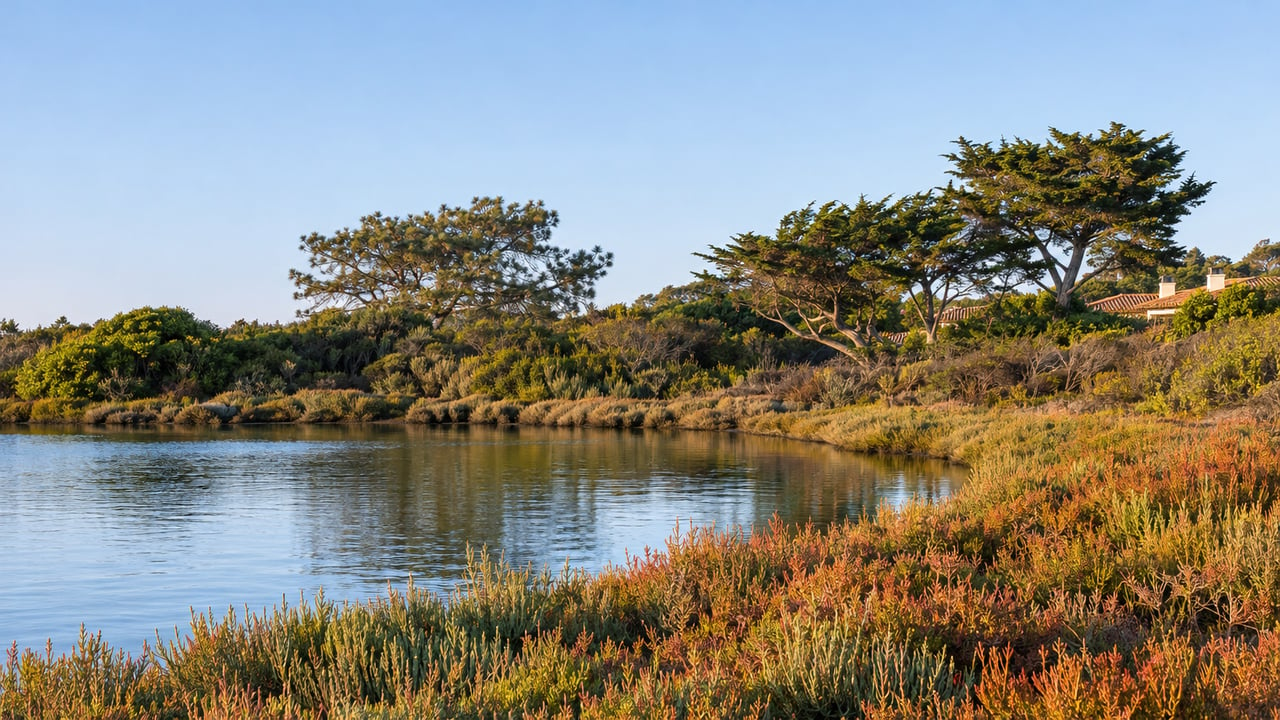
Buyers comparing Del Mar usually read the zoning map block by block. They check the height limits, the bluff rules and design review. Then they get to the 324 acres along Jimmy Durante Boulevard. That's the largest property inside the city, and Del Mar's own code assigns its allowable uses to someone else.
This year, that someone else made two decisions that tell you more about Del Mar's future than any median price does. In August, the fairgrounds board ended an affordable housing deal the city was counting on to meet a state mandate. In October, the same board heard a pitch for a 12,000- to 16,000-seat soccer stadium, a hotel and a retail district. Del Mar's leaders opposed both outcomes, and in both cases they had no vote.
The Del Mar Fairgrounds is state-owned land run by the 22nd District Agricultural Association. That's a governor-appointed board, and its boundaries reach into both Del Mar and the City of San Diego. Three layers of authority sit on top of it, and none of them is Del Mar City Hall:
The fairgrounds follows a separate chain of approvals, and the city can comment on it but cannot control it.
The board's incentives explain why the October pitch got a serious hearing. Fairgrounds CEO Becky Bartling put it plainly at the meeting, as the San Diego Union-Tribune reported: "The challenge was we didn't have money, so nothing got done. Anything that comes before us, and this plan does that, it needs to get paid (for) by the developer."
The San Diego Wave's controlling owners, Lauren Leichtman and Zachary Leichtman-Levine, brought exactly that kind of plan. Under the name Del Mar Dreams, they presented a concept with these pieces, according to the Union-Tribune:
The state would provide the land, and the owners and their partners would pay for the development.
The team has its own reasons for the timeline. Leichtman-Levine told the board the Wave ranks fourth in picking game dates at Snapdragon Stadium. The club's current lease there runs on a six-year deal that comes up for renewal in 2031. The Del Mar Dreams presentation targets that same year for its first phase:
| Phase | What it includes | Proponents' target |
|---|---|---|
| Approvals | EIR, coastal permit, ground lease | 2026–28 |
| Phase 1 | Stadium, parking structure, tram | Opens 2031 |
| Phase 2 | Shops and restaurants | 2031–33 |
| Phase 3 | Hotel and convention center | 2032–34 |
The same slide says the dates "are targets, firmed up after feasibility," and promises that the San Diego County Fair runs every June and July through every phase. Those targets are worth checking against how long the last big plan for this land actually took.
The fairgrounds has tried to build out the land around the track before. The timeline below draws on Union-Tribune reporting from 2009 and 2010, Patch's account of the 2012 settlement and The Coast News on the 2017 approval:
| Year | What happened |
|---|---|
| 2000 | Master plan update process begins with an advisory committee |
| 2009 | Draft master plan and EIR released, with a 25-year buildout including a 330-room hotel, exhibit halls, a health club and sports facilities |
| 2010 | Funding still unidentified; near-term projects pushed back five to ten years |
| 2011 | Del Mar, Solana Beach and the San Dieguito River Park JPA sue over the EIR |
| 2012 | Settlement: no new hotel for at least five years, more Solana Gate traffic controls, removal of the I-5 electronic sign, consideration of moving the parking structure |
| 2017 | Board approves the master plan and recertifies the EIR, without the hotel |
Those were the hotel, the lawsuit and the funding gap, the same issues the Wave proposal now raises. A separate Sierra Club challenge ended with a revised EIR covering traffic, water supply and greenhouse gas emissions, according to The Coast News. When the plan was finally approved in 2017, the board's president said a hotel was unlikely to be financially viable. That earlier plan does not authorize anything in the 2026 concept, which would need its own environmental review and coastal permit.
The difference this time is money. In the 2000s nobody was paying, and today a developer is offering to. Seventeen years of review happened even without a funded project. A funded one adds pressure to move faster, and it also gives opponents something concrete to challenge.
The stadium shows what the board might approve over Del Mar's objections. The housing deal shows what it can turn down when the city needs it.
In 2024, Del Mar and the fairgrounds signed an exclusive negotiating agreement for a 61-unit affordable housing project. That would have covered 61 of the 113 affordable units the city must accommodate before 2029 under a state mandate. Under the agreement, the fair board could end talks at any time on its own.
In June 2026, the board picked the Surf and Turf RV Park as the only site worth studying. That 1.5-acre site sits on fairgrounds land inside the City of San Diego, so Del Mar would have needed San Diego to annex it before the units counted toward Del Mar's allocation. On Aug. 18, 2026, the board voted 5-3 to end the agreement. Director Ted Miyahara, who made the motion, told the board that "the question is whether San Diego will take the necessary government action to annex property and allow the city of Del Mar to receive RHNA credit," as Voice of San Diego reported. The City of Del Mar posted news of the vote that same day.
The pressure then moved onto land Del Mar does zone. The state housing department had given the city until November 2026 to secure a lease, and the Union-Tribune reported that Del Mar can no longer meet that deadline. The city's backup plan in its state-certified housing element is to rezone land on the North Bluff and/or South Stratford to 20 to 25 units per acre, enough capacity for at least 54 lower-income units.
The North Bluff property, at the city's northern border, is already the proposed site of Seaside Ridge. That 259-unit project includes 42 lower-income and 43 moderate-income units. The city rejected several applications as incomplete, and the property owner has a court petition pending. A board vote on state land at the south end of town has moved Del Mar's housing obligations to the north end.
The city's response to the stadium pitch came from two elected officials. It was not a council vote. On Oct. 15, Mayor Tracy Martinez and Deputy Mayor John Spelich emailed several thousand residents, as reported by The Coast News:
"The proposed layout places the cluster of new structures on the south side of the Fairgrounds property, adjacent to the ecologically sensitive San Dieguito Lagoon... We must get a seat at the table regarding the future of the Fairgrounds, and we are committed to making that happen."
A Union-Tribune roundup on Oct. 23 found mixed views among economists and business leaders. Most of those quoted opposed the idea or wanted alternatives and further review, and online criticism focused on transit, traffic and effects on the fair.
The Wave asked the board to consider a two-year exclusive negotiating period at its next meeting. The published agenda for the Nov. 10 board meeting did not include that request. It listed an informational recap from the Master Site Planning Committee and a CEO update on the district's letter to the City of Del Mar. Even by the proponents' own schedule, approvals take until 2028, and the first match would come years after that.
Can the City of Del Mar block a stadium at the fairgrounds? According to a Coastal Commission staff report, most or all of the site is in the Commission's original jurisdiction, and Del Mar's Local Coastal Program does not govern that area. In the last round, Del Mar's influence came through litigation. As Patch reported, the 2012 settlement it reached with Solana Beach and the river park JPA included no new hotel for at least five years.
Does the stadium plan affect the fair or the races? The proponents' materials say the fair runs every June and July through all phases and that the race meet stays coordinated throughout the racetrack lease. Those are commitments in a concept presentation, and nothing has been approved.
Why does the housing outcome matter to someone buying on the north end of town? The fallback in the housing element points to rezoning on the North Bluff and/or South Stratford. Seaside Ridge, a 259-unit proposal now in court, is planned for the North Bluff site.
This post is general information about public processes, not legal advice. If a pending land use decision matters to a specific purchase, confirm the details with a land use attorney or the agencies involved.
Most Del Mar listings say nothing about the fairgrounds, but it affects traffic, views and what gets built around the lagoon for years. If you're weighing a home near Jimmy Durante Boulevard or on the North Bluff, Whiskey Kidd Realty can walk the property with you and go through the public records. Want to start with numbers? Request a Free Home Valuation.
Stay up to date on the latest real estate trends.
Get assistance in determining current property value, crafting a competitive offer, writing and negotiating a contract, and much more. Contact Matt today to discuss all your real estate needs!